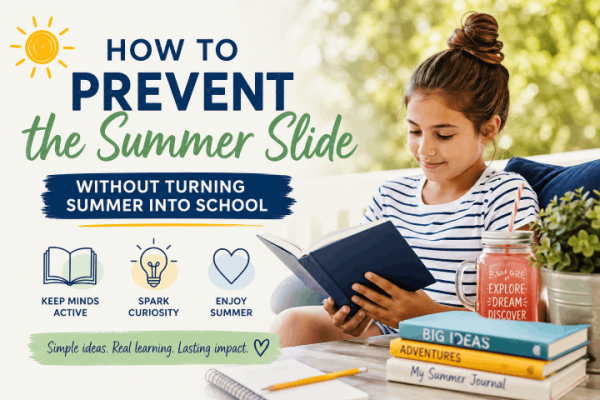

How to Prevent the Summer Slide—Without Turning Summer Into School
As the school year winds down, many families start thinking about one big question:
How do we keep kids learning over the summer without making it feel like school?
The concern is real. Students can lose some academic ground over the summer months—often referred to as the “summer slide.” But the solution isn’t hours of worksheets or rigid schedules.
In fact, the most effective summer learning often looks nothing like school at all.
Start with a Simple Mindset Shift
Summer doesn’t need to be about more school.
It should be about keeping minds active in natural, low-pressure ways.
Think of it this way:
- During the school year → structured learning
- During the summer → applied, real-world learning
The goal is consistency, not intensity.
1. Make Reading a Daily Habit (Without Making It a Chore)
Reading is one of the easiest and most powerful ways to maintain academic skills.
But here’s the key: choice matters more than level.
Let students:
- Pick books, magazines, or graphic novels that interest them
- Re-read favorite series
- Explore topics they don’t get during the school year
Even 10–15 minutes a day can make a difference.
For younger students, reading with an adult can be just as valuable as reading independently.
2. Turn Everyday Activities Into Learning Opportunities
You don’t need a workbook to build skills.
Try things like:
- Cooking (measuring, fractions, following directions)
- Grocery shopping (budgeting, estimating totals)
- Road trips (maps, geography, planning)
- Outdoor activities (observation, science, problem-solving)
These experiences build critical thinking in ways worksheets simply can’t.
3. Keep Writing Alive—In Small, Meaningful Ways
Writing doesn’t have to mean essays.
Instead, encourage:
- Journaling about daily activities or trips
- Writing letters or emails to family members
- Keeping a summer “memory list”
- Creating stories, comics, or even social media captions (age-appropriate)
The goal is expression, not perfection.
4. Use Technology Thoughtfully
Not all screen time is created equal.
There are plenty of ways to make technology work for learning:
- Educational apps and games
- Audiobooks and podcasts
- Documentaries or how-to videos
The key is balance—technology should support curiosity, not replace it.
5. Build a Light Routine (But Keep It Flexible)
Kids don’t need a strict schedule, but they do benefit from some consistency.
A simple routine might include:
- Reading time
- Outdoor play
- Creative time (drawing, building, exploring)
Even a loose structure helps maintain habits without making summer feel restricted.
6. Prioritize Curiosity Over Compliance
During the school year, students often focus on completing assignments.
Summer is a chance to rediscover learning for the sake of learning.
Follow their interests:
- If they like animals → visit a zoo or research a favorite species
- If they like sports → track stats or learn rules/strategies
- If they like building → try simple engineering challenges
When kids are curious, learning happens naturally.
7. Don’t Forget: Rest Matters Too
This is where many well-intentioned plans go wrong.
Students need time to:
- Relax
- Play
- Be bored (yes—boredom often leads to creativity)
A packed schedule can lead to burnout, which works against learning.
Balance is everything.
Final Thought
Preventing the summer slide doesn’t require turning your home into a classroom.
Instead, focus on:
- Consistency over intensity
- Curiosity over compliance
- Real-life experiences over worksheets
When learning feels natural and enjoyable, students are far more likely to stay engaged—and return to school in the fall ready to succeed.